Publicación: 1 de julio de 2026

La inteligencia artificial no define el futuro. Define quién lo decide.

Una advertencia estratégica y una hoja de ruta para construir poder económico, soberanía productiva y comunidades de innovación antes de que la dependencia se vuelva destino.
Economía política Startups Urbanismo Soberanía tecnológica
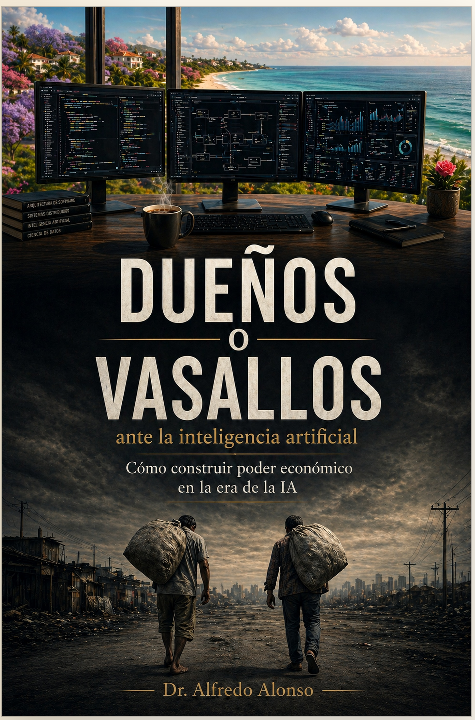
Portada del libro Dueños o Vasallos

Lanzamiento editorial

Dueños o Vasallos. Ante la Inteligencia Artificial

Cómo construir poder económico en la Era de la Inteligencia Artificial. Una obra para lectores que no quieren ser espectadores en la redefinición del trabajo, la riqueza y la decisión tecnológica.

Libro Dueños o Vasallos

Español

Ser dueño del destino tecnológico... o vasallo.

No decidir también es decidir. Y casi siempre es la peor decisión.

El libro propone una salida concreta: startups tecnológicas, soberanía productiva y personas con creatividad que transforman talento en prosperidad.

Tesis central

El cambio no es opcional. Su forma todavía lo es.

Pero por poco tiempo, y solo para quienes den soluciones a las nuevas necesidades.

01

La IA cambia el trabajo

Transforma el qué, el cómo y el para qué de su trabajo. Puede responder solo o en compañía, o correr riesgos mayores.

02

El mercado dejó de parecerse al mapa aprendido

Quienes aprendieron cómo era el mundo hace poco pueden no ver ni el mercado potencial ni las nuevas formas de atenderlo.

03

La salida es operativa

Mentalidad, validación, gestión del caos y comunidades de innovación como sistema promotor.

Lectores naturales

Profesionales, emprendedores, responsables públicos, académicos y comunidades que aún pueden decidir.

Los que temen ser desempleados Empresarios en busca de oportunidades Emprendedores y fundadores de startups actuales o potenciales Tomadores de decisiones en política pública, desarrollo regional y educación Profesionales que sienten que las grandes ciudades ya no ofrecen lo prometido Universidades, académicos y nómadas digitales Cualquier lector que quiera comprender el mundo en que vive, cómo le afecta y qué puede hacer

Acompañamiento estratégico

De la Estrategia a la Ejecución Real

En medio del huracán, ¿toma usted el timón o va a la deriva?
Ya está decidido que vivimos cambios fundamentales. En todos los cambios hay ganadores y perdedores. Lo que no está decidido es a qué grupo pertenece usted. Quienes primero se adapten tendrán más ventajas.

Si usted es persona de acción centrada en su actividad, no necesita transformarse en especialista en los últimos desarrollos. No necesita aprender ni distraerse. Ni adquirir modelos caros que no sabe cómo optimizar.

Necesita los servicios de quien lo complemente. Con el apoyo de la inteligencia artificial puede disponer del director de operaciones, el director de ventas, el director de finanzas y el director administrativo que nunca pudo pagar, todos en uno solo.

Si quiere saber cómo aplicar esto a su negocio o posibilidades de ingresos, agendemos una conversación.

Próxima Cohorte

Inicio: 15 de julio de 2026

$500 MXN bisemanales · Cupos estrictamente limitados

Inscribirse a la cohorte →
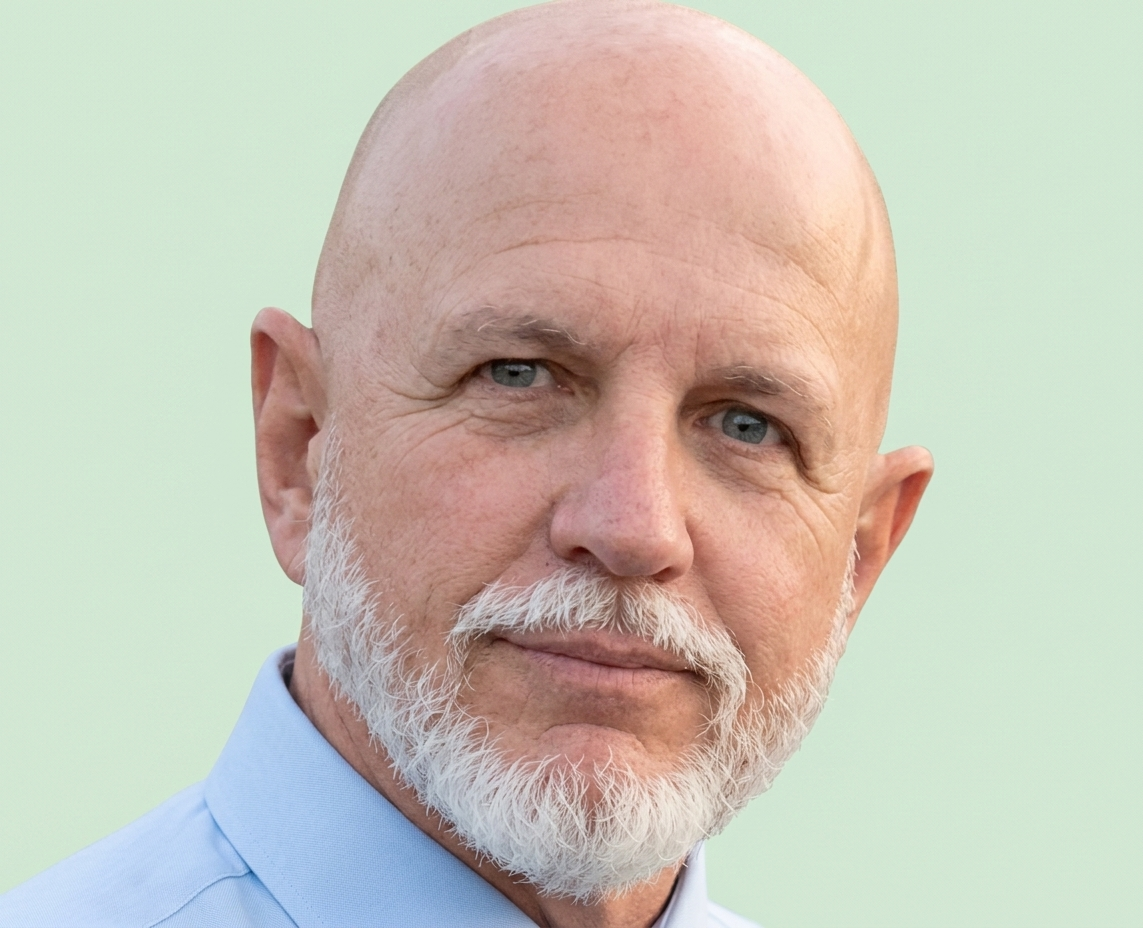
Retrato de Alfredo Alonso

Empresario · Autor · Académico · Asesor

Prof. Dr. MBA. Ing.Alfredo Alonso

He dirigido proyectos de ingeniería de cientos de miles de horas hombre y he sido empleado, vendedor, comisionista, ejecutivo, directivo, empresario y profesor universitario.

Blog

Inquietudes, análisis y soluciones

Reflexiones sobre el cambio tecnológico, sus efectos económicos y las estrategias que permiten prosperar en lugar de sólo sobrevivir.

Artículo 1

Ver o juzgar: la lección del que pasó de derrotado a imperio

El tema que interesa aquí son las circunstancias del cambio actual y lo que esto implica en peligros y oportunidades —para sociedades, pero sobre todo para cada uno de nosotros y para nuestros ingresos o la pérdida de los mismos.

En ningún momento, en esta presentación ni en las futuras en este sitio, se tratarán juicios morales. Se trata de la realidad, no de si es justa, injusta, moral, inmoral, si me gusta o si otra alternativa sería preferible.

La razón es que podemos ver y analizar, o podemos juzgar, pero no podemos hacer ambas cosas al mismo tiempo. Voy a ilustrar esta afirmación con el impacto que tiene para aprovechar nuevas circunstancias y crear nuevos negocios, con uno de muchos ejemplos posibles.

Al terminar la Segunda Guerra Mundial, la industria de la mayoría de los países estaba destruida por la guerra, pero no la de Estados Unidos. Al frente de las corporaciones estadounidenses se encontraban quienes habían entrado al mundo laboral en los «alegres veintes» y luego les tocó sobrevivir la «gran depresión». En Estados Unidos había abundancia: primero por la producción para la guerra y después porque no tenían competencia en ningún lugar; ellos exportaban a todo el mundo.

En esas circunstancias apareció una nueva generación más desenfadada que aquella que solo pensaba en ahorrar cada centavo por lo que pudiese pasar. Los mayores, cuyos «sacrificios» no eran valorados por esos jóvenes, los juzgaban y los consideraban «rebeldes sin causa».

En ese contexto llegó a Estados Unidos un fabricante de muebles japonés. Sus instalaciones estaban destruidas y no tenía mercado, porque en Japón lo que la gente necesitaba era, al menos, comida. Viajó con la esperanza de encontrar a alguien con quien hacer negocios para salir adelante.

No entendía mucho inglés, por lo que no podía juzgar lo que veía. Y una de las cosas que vio fue a grupos de jóvenes metiendo en sus coches enormes radioconsolas: aparatos que integraban un receptor de radio AM o de onda corta y un tocadiscos en un gabinete de madera, que solía incluir un amplio compartimento para almacenar discos. Mover esos muebles era complicado, pero el sonido de la única alternativa más pequeña era horrible.

Había una necesidad obvia en un segmento creciente del mercado —obvia para quien pudiese verla. Los que convivían con esos jóvenes, los directivos de las grandes empresas de la época, juzgaron en lugar de ver. El que sí vio fue un extranjero que no podía juzgar porque para él todo era nuevo: ese fabricante de muebles japonés, Sony, construyó un imperio y se convirtió en el principal fabricante mundial de equipos de música por varias décadas.


Muchos trabajos y muchos negocios no van a sobrevivir. Es un hecho. ¿Qué necesitamos cada uno de nosotros para estar del lado de los que no solo sobreviven, sino que prosperan más allá de sus sueños más ambiciosos?

Los números son claros: la productividad se dispara y los roles tradicionales se desvanecen. La mayoría de las personas cree que los cambios destruyen oportunidades. La realidad es que tanto las crean como las destruyen —para los que llegan tarde, solo destruyen. La historia nos enseña que esto no es el fin, sino un patrón que se ha repetido una y otra vez.

En la siguiente entrega analizaremos por qué los que sobreviven no son los más fuertes, sino los que mejor se asocian con el cambio, y por qué la estrategia correcta no es reaccionar al cambio, sino prepararse antes de que este llegue.

Sun Tzu, en El arte de la guerra, nos indica el camino: conócete a ti mismo, conoce a tu enemigo y conoce el terreno. Trasladado al mundo laboral y de los negocios: conoce los cambios, sus efectos y sus tendencias.

Sun Tzu también afirma que el victorioso es aquel que primero gana y solo luego entra en batalla. El que entra en batalla y luego trata de ganar ya empezó perdiendo.

Dicho en los términos que aquí interesan: no esperes a que tu industria colapse para empezar a prepararte. Para entonces, quienes se prepararon antes ya ocuparon los mejores lugares.

Ver la realidad sin juzgar es el primer paso, pero ver no es suficiente. Necesitamos estrategia. Y la estrategia requiere números reales, no ilusiones. No podemos conocer los hechos futuros, pero sí es nuestra responsabilidad considerar los efectos futuros de los hechos presentes y pasados.
¿Qué oportunidades, qué peligros estás viendo hoy que otros están juzgando?

Publication: July 1, 2026

Artificial intelligence does not define the future. It defines who gets to decide it.

A strategic warning and a concrete roadmap for building economic power, productive sovereignty and innovation communities before dependence becomes destiny.

Political economy Startups Urban design Technological sovereignty
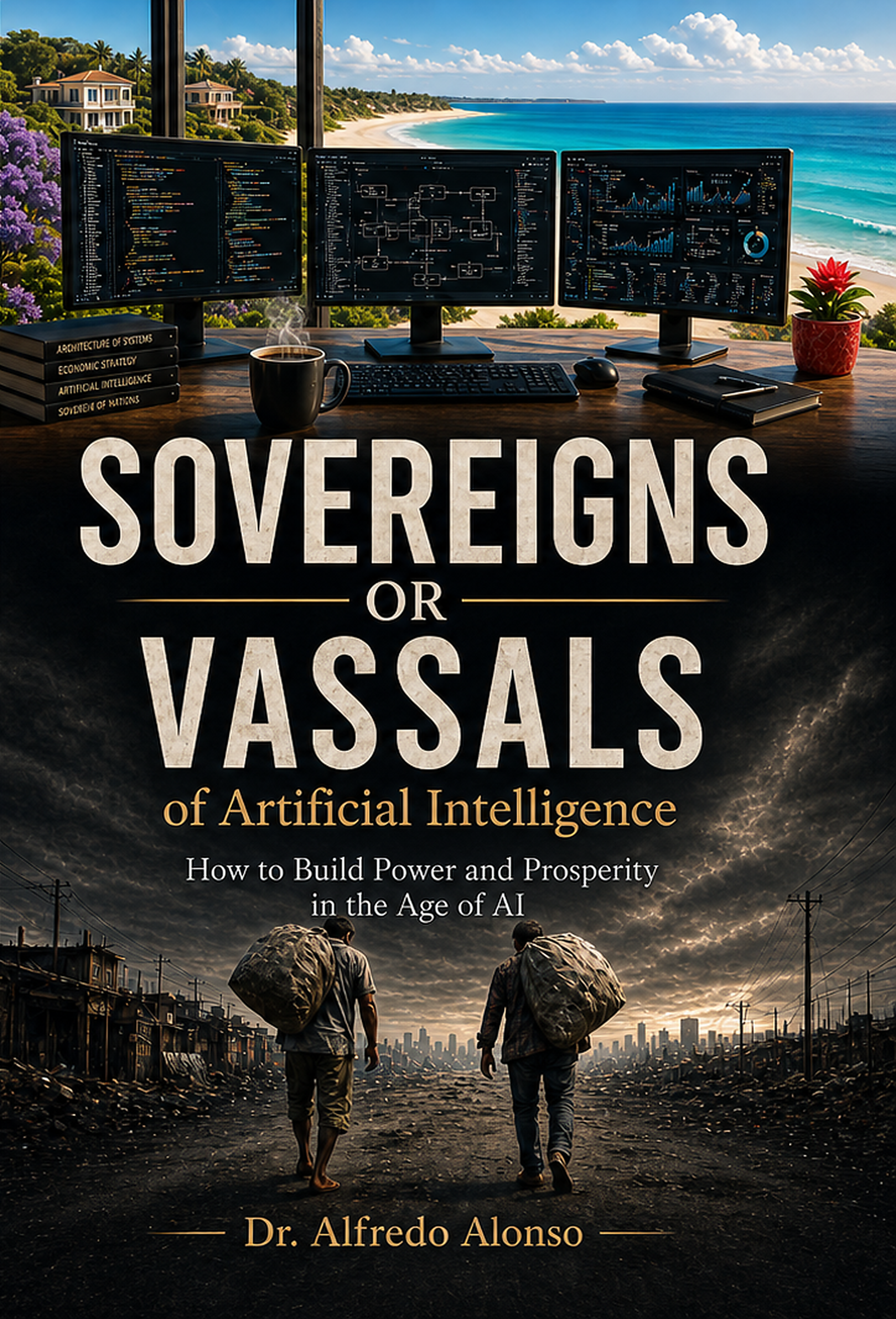
Book cover Sovereigns or Vassals

International editorial launch

Sovereigns or Vassals of Artificial Intelligence

How to build power and prosperity in the age of AI. A book for readers who refuse to be spectators while work, wealth and technological decision-making are being redefined.

Book cover Sovereigns or Vassals

English

Will you own your future, or become dependent on those who control technology?

The window is still open. But not for long.

The book presents a concrete alternative: technology startups, productive sovereignty and creative people turning talent into prosperity.

Core thesis

The change is not optional. Only its shape still is.

But not for long, and only for those who provide solutions to new needs.

01

AI changes work

It changes the what, how and purpose of your work. You can respond alone or with others, or face greater risks.

02

The market no longer looks like the map people learned

Those who recently learned how the world worked may miss both the potential market and the new ways to serve it.

03

The way out is operational

Mindset, validation, chaos management and innovation communities as a promotional system.

Natural readership

Professionals, entrepreneurs, policymakers, academics and communities that still have a choice.

People afraid of losing their jobs Business owners seeking opportunities Current or potential startup founders Business owners and small merchants Decision-makers in public policy, regional development and education Professionals who feel that large cities no longer offer what they promised Universities, academics and digital nomads Any reader who wants to understand the world they live in, how it affects them and what they can do

Strategic support

From Strategy to Real Execution

In the middle of the storm, do you take the helm or drift?
It is already decided that we are living through fundamental change. In every change there are winners and losers. What has not been decided is which group you belong to. Those who adapt first will have greater advantages.

If you are an action-oriented person focused on your own activity, you do not need to become a specialist in the latest developments. You do not need to learn or distract yourself. Nor buy expensive models you do not know how to optimize.

You need services from someone who complements you. With artificial intelligence, that support can become the operations, sales, finance and administrative director you may never have been able to pay for, all in one.

If you want to know how to apply this to your business or income possibilities, let us schedule a conversation.

Upcoming Cohort

Starts: August 29, 2026

$36 USD biweekly · Spots strictly limited

Enroll in the cohort →
Portrait of Alfredo Alonso

Entrepreneur · Author · Academic · Advisor

Prof. Dr. MBA. Ing.Alfredo Alonso

I have led engineering projects involving hundreds of thousands of man-hours and have worked as an employee, salesperson, commission agent, executive, director, entrepreneur and university professor.

Blog

Concerns, analysis and solutions

Reflections on technological change, its economic effects and the strategies that allow people to thrive rather than merely survive.

Article 1

See or Judge: The Lesson of the Man Who Went from Defeated to Empire

The subject that matters here is the nature of current change — what it means in terms of dangers and opportunities, not just for societies at large, but above all for each of us individually, and for our income or the loss of it.

At no point in this or future pieces on this site will moral judgments be made. This is about reality as it is, not about whether it is fair or unfair, moral or immoral, whether we like it or whether some other arrangement would be preferable.

The reason is simple: we can observe and analyze, or we can judge — but we cannot do both at the same time. Let me ground that claim in something concrete: the difference it makes when it comes to spotting new opportunities in changing times.

When the Second World War ended, the industries of most countries lay in ruins — everywhere, that is, except the United States. At the helm of those corporations were those who had entered the workforce during the Roaring Twenties and then lived through the Great Depression. The United States had abundance: first from wartime production, then from the complete absence of competition. They exported to the entire world.

Into that prosperity stepped a new generation — looser, less anxious, unburdened by the memory of scarcity. The older generation, whose sacrifices these young people seemed to dismiss, returned the favor by dismissing them in turn. They called them rebels without a cause.

It was into this world that a Japanese furniture maker arrived. His factory was destroyed. He had no market — in Japan, people needed food before anything else. He traveled hoping to find someone to do business with, some way to start over.

He didn't speak much English, which meant he couldn't judge what he saw. And one of the things he saw was groups of young people hauling enormous console radios into their cars — large wooden cabinets housing an AM or shortwave radio receiver and a record player, with storage for albums. Moving these things was a production. But the only smaller alternative sounded terrible.

There was an obvious need in a growing segment of the market — obvious, that is, to anyone willing to see it. The people who lived alongside those young people, the executives of the era's major companies, judged rather than looked. The one who looked was a foreigner who couldn't judge because everything was foreign to him. That Japanese furniture maker — Sony — built an empire and became the world's leading manufacturer of audio equipment for decades.


Many jobs and many businesses are not going to survive. That is a fact. The question is what each of us needs to do to end up on the side of those who not only survive, but thrive beyond their most ambitious expectations.

The numbers are unambiguous: productivity is surging and traditional roles are fading. Most people assume that disruption destroys opportunity. The truth is that it does both — it creates and destroys simultaneously. For those who arrive late, it only destroys. History shows us this is not an ending. It is a pattern that has played out again and again.

Sun Tzu, in The Art of War, points the way: know yourself, know your enemy, know the terrain. Translated into the language of work and business: know the changes, their effects, and their trajectory.

Sun Tzu also tells us that the victorious warrior wins first and goes to war afterward. The one who goes to war and then tries to win has already begun to lose.

In the terms that matter here: do not wait for your industry to collapse before you start preparing. By then, those who prepared earlier will have already claimed the best positions.

Seeing reality clearly is the first step — but seeing is not enough. We need strategy. Strategy demands that we understand what is happening right now, in this moment, to jobs, to businesses, to productivity. We cannot know the future. But it is our responsibility to think carefully about the future consequences of present and past events.

What opportunities — what dangers — are you seeing today that others are busy judging?

Comentarios